SYSTEM / 001 — CASE STUDY
Field Learning Studio
LOCAL WORKBENCH / ACTIVE DEVELOPMENT
A human-led analytical workbench for turning field evidence into findings, lessons, recommendations and professional learning outputs.
01 / CONTEXT
Context
MEL, evaluation, donor reporting and programme learning teams work with interviews, observations and field notes that rarely arrive in a consistent structure.
02 / PROBLEM
Problem
A polished summary can conceal weak evidence, missing provenance or an unreviewed inference. The difficult work is retaining the relationship between source material, analytical claims and the decisions that follow.
03 / DESIGN PRINCIPLE
Design Principle
Keep the human analyst responsible for qualification and judgment. Make evidence relationships and readiness checks inspectable rather than treating a fluent draft as proof.
04 / SYSTEM
System
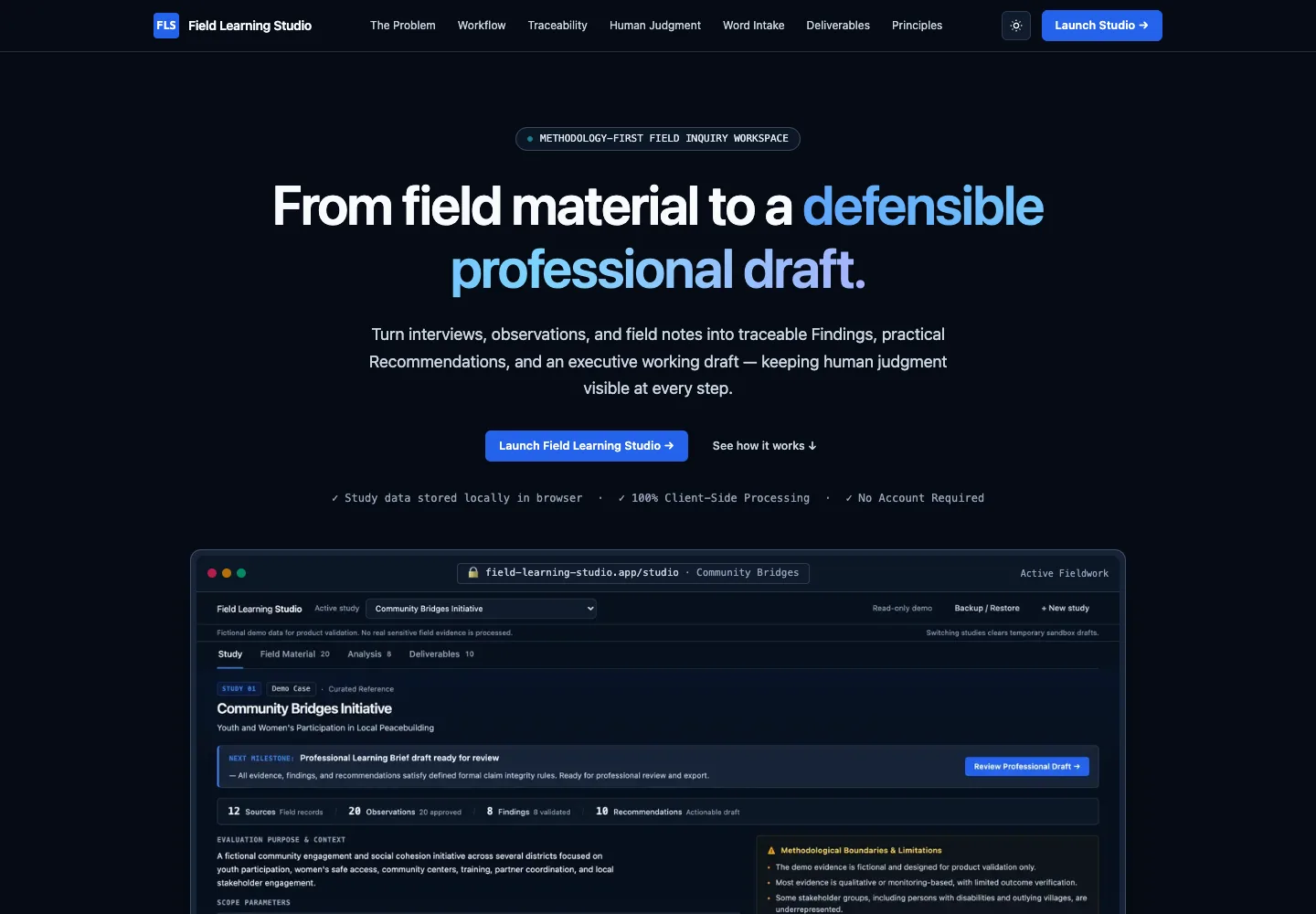
A human-led, browser-local field learning synthesis app. Local studies connect questions, scope and framework with imported field material and reviewed analytical outputs.
05 / WORKFLOW
Workflow
- Raw field evidence
- Source inventory
- Evidence matrix
- Findings
- Lessons learned
- Good practices
- Recommendations
- QA review
- Donor-ready learning brief
06 / CURRENT STATE
Current State
- Local study creation or cloning of read-only showcase cases; questions, scope and framework.
- DOCX, CSV/TSV and structured-note intake with human qualification of observations.
- Findings with supporting, challenging and qualifying evidence relationships.
- Lessons, practices and recommendations developed from reviewed findings.
- Professional Draft assembly, Final Review and controlled working/professional export.
- Browser-local IndexedDB persistence, structured backup and file-inclusive recovery archives.
07 / INTERFACE
Interface
08 / BOUNDARIES
Boundaries
09 / ACCESS
Access
Implementation facts checked against the public repository README.
SOURCE / README (opens in a new tab)